


Blogs Categories
RECD for DG Set: How to Control Emissions from Diesel Generators
Learn how RECD for DG Sets helps control diesel generator emissions, reduce particulate matter, and improve air quality with effective emission control.
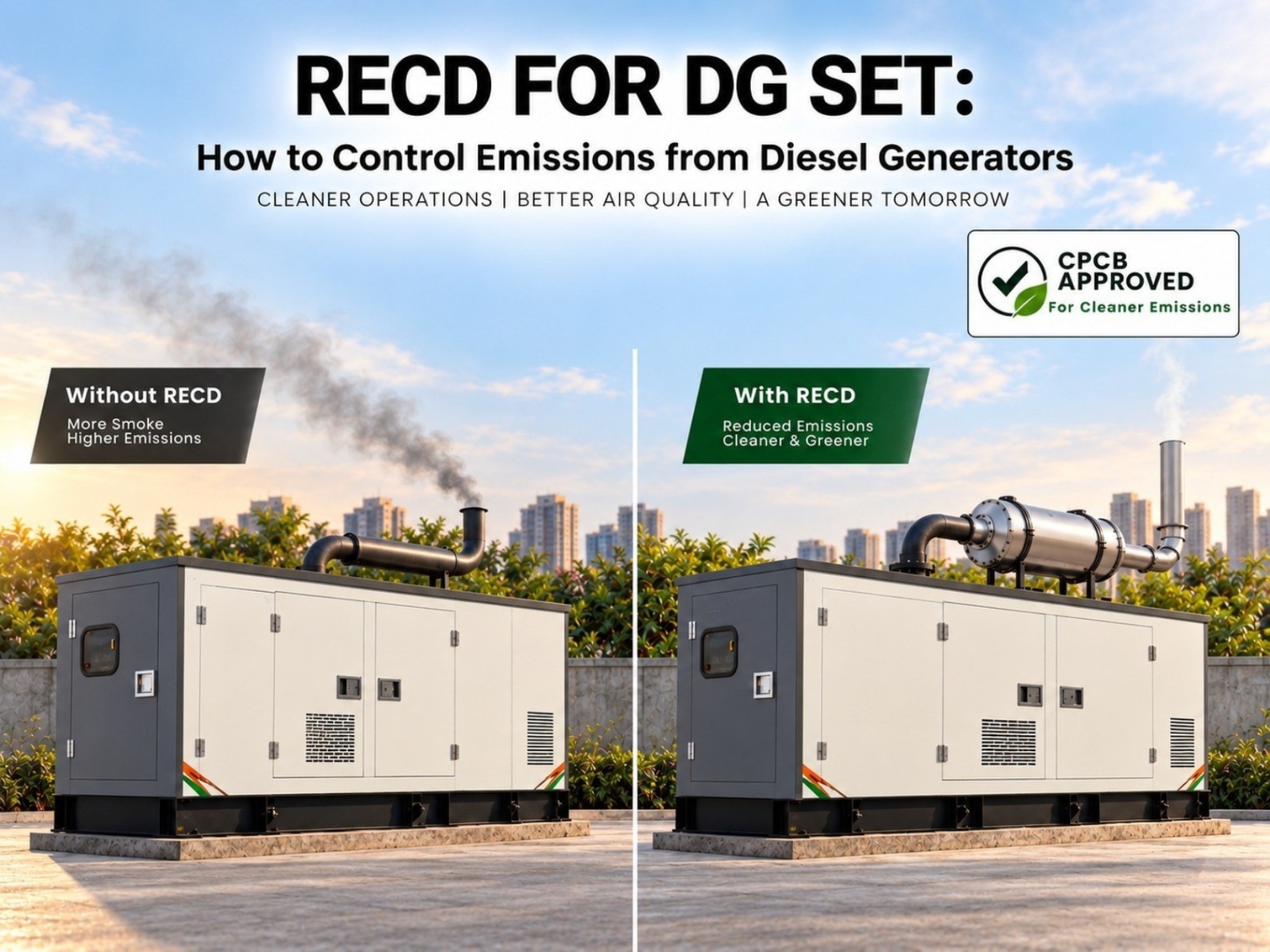
Diesel generators are widely used as reliable backup power sources in commercial buildings, industries, hospitals, construction sites, and other facilities. However, when a DG Set operates, its diesel engine produces exhaust gases and particulate matter that can contribute to air pollution.
This makes emission control an part of responsible DG Set operation. A RECD for a DG Set is designed to help control particulate emissions from diesel generator exhaust and reduce the amount of visible smoke released into the surrounding environment.
But how exactly does a RECD system work, and when should you consider installing one? Let's understand it step by step.
Why Do Diesel Generators Produce Pollution?
A diesel generator burns diesel fuel inside its engine to produce mechanical power, which is then converted into electricity. During combustion, the engine produces exhaust that contains various pollutants.
The level of emissions can depend on factors such as:
- Engine condition
- Fuel quality
- Generator loading
- Combustion efficiency
- Maintenance practices
- Operating hours
- Age and design of the DG Set
Poorly maintained engines or generators operating under unsuitable conditions may produce more visible smoke and particulate emissions.
This is why DG Set emission control requires attention not only to the exhaust system but also to the overall operating and maintenance condition of the generator.
What Is RECD for DG Set?
RECD stands for Retrofit Emission Control Device.
A RECD for a DG Set is an emission-control system installed on an existing diesel generator to help reduce particulate matter from its exhaust.
Instead of replacing an entire existing DG Set, a suitable retrofit emission control device can be integrated with the generator's exhaust system.
The basic objective is simple: Diesel combustion → Exhaust gases → RECD system → Reduced particulate emissions
The exact technology and configuration can vary depending on the generator, engine specifications, and applicable requirements.
How Does a RECD Kit for a DG Set Help Control Emissions?
1. Captures Particulate Matter
One of the key purposes of a RECD system is to reduce particulate matter present in diesel exhaust. The device works within the exhaust path and helps capture or control particulate pollutants before the exhaust is released into the atmosphere.
2. Helps Reduce Visible Smoke
Dark smoke from a diesel generator is often associated with incomplete combustion and particulate emissions. A properly selected and installed RECD Kit for a DG Set can help reduce particulate emissions and, consequently, visible smoke from the exhaust.
However, an emission-control device should not be treated as a substitute for proper engine maintenance.
3. Supports Cleaner DG Set Operation
Emission control becomes particularly important where diesel generators operate for extended periods or are located close to populated or occupied areas. A RECD system can form part of a broader approach to maintaining cleaner generator operations.
What Problems Can Excessive DG Set Emissions Cause?
Diesel generator emissions can become a concern when generators operate frequently, especially in areas where people are working or living nearby.
Excessive smoke and particulate emissions can:
- Reduce local air quality
- Create visible smoke around the generator area
- Cause an unpleasant exhaust environment
- Increase particulate pollution
- Create concerns for workers and nearby occupants
- Make it difficult for facilities to maintain appropriate emission-control practices
The solution should begin with identifying the reason behind excessive emissions rather than simply adding an emission-control device.
Can a RECD Solve Every DG Set Pollution Problem?
No.
A RECD for a DG Set is primarily an emission-control solution. It does not correct every possible cause of excessive generator emissions.
For example, excessive smoke can also result from:
- Poor engine maintenance
- Dirty air filters
- Faulty fuel injectors
- Poor-quality fuel
- Incorrect engine settings
- Excessive engine wear
- Improper loading
- Incomplete combustion
Therefore, the generator should be inspected and maintained properly, along with the installation and maintenance of the RECD system.
When Should You Consider a RECD System for a DG Set?
A RECD may be considered when an existing diesel generator requires additional particulate emission control.
Before selecting a system, it is important to evaluate:
DG Set Capacity
The RECD should be suitable for the generator's capacity and engine configuration.
Engine and Exhaust Specifications
Different engines produce different exhaust characteristics. The device should therefore be selected according to the specific DG Set and exhaust arrangement.
Operating Conditions
How frequently the generator operates, its typical load, and operating environment can influence the suitability of an emission-control system.
Applicable Emission Requirements
The selected solution should be evaluated against the applicable CPCB requirements and current regulatory requirements for the particular DG Set and installation.
RECD Kit vs. Replacing an Existing DG Set
When an existing diesel generator is still operational and meets the facility's power requirements, replacing the entire generator may not be the only way to improve emission control.
A retrofit system works with the existing DG Set by adding an emission-control device to its exhaust system. This can make a RECD Kit for a DG Set a practical option when retrofit emission control is appropriate.
However, the right choice depends on the generator's condition, technical specifications, applicable requirements, and site conditions.
How to Choose the Right RECD for DG Set?
Choosing an emission-control device should not be based only on generator capacity.
Consider these factors before installation:
Check DG Set Specifications
Collect details such as:
- DG Set manufacturer
- Engine model
- Rated capacity
- Exhaust configuration
- Operating load
- Existing emission-control equipment
Consider the Exhaust System
The RECD needs to be compatible with the existing exhaust arrangement. Incorrect sizing or unsuitable installation can affect system performance.
Look at Maintenance Requirements
Like the generator itself, an emission-control device requires appropriate inspection and maintenance.
Work With an Experienced Supplier
A professional supplier can assess the DG Set, understand the application, and recommend a suitable configuration rather than using a one-size-fits-all approach.
Why Installation and Maintenance Matter
Installing a RECD is only one part of effective emission control.
The generator should continue to receive regular maintenance, including appropriate checks of the:
- Engine
- Fuel system
- Air intake
- Lubrication system
- Exhaust system
- RECD unit
If the engine itself is producing excessive smoke because of a mechanical problem, installing an emission-control device alone may not address the underlying issue.
Good engine maintenance + appropriate RECD installation + regular inspection = better emission-control management.
RECD for DG Set: A Practical Approach to Pollution Control
Diesel generators remain important for backup and standby power, but their emissions need to be managed responsibly.
A RECD kit for a DG Set can help control particulate emissions from an existing diesel generator by treating the exhaust before it is released into the atmosphere.
The important thing is to select the appropriate system for the specific DG Set and ensure that installation, operation, and maintenance are handled correctly.
For facilities looking to improve DG Set pollution control, understanding the generator's condition and emission requirements should be the first step towards selecting the right solution.
Looking for a RECD Kit for DG Set?
Kumar Generator House provides RECD Kit solutions for DG Sets, helping businesses meet particulate emission control requirements for existing diesel generators.
Before selecting a RECD system, evaluate the DG Set specifications, engine condition, exhaust arrangement, and applicable requirements to determine the right solution.
Frequently Asked Questions
1. What is RECD in a DG Set?
RECD stands for Retrofit Emission Control Device. It is an emission-control system designed to be fitted to an existing diesel generator to help reduce particulate emissions from its exhaust.
2. What is the purpose of a RECD Kit for a DG Set?
The primary purpose of a RECD Kit is to help control particulate matter and related emissions from diesel generator exhaust.
3. Does a RECD reduce DG Set smoke?
An appropriate RECD system can help reduce particulate emissions and visible smoke. However, excessive smoke may also indicate an engine or maintenance problem that needs to be addressed.
4. Can a RECD be installed on an existing DG Set?
Yes, a RECD is specifically a retrofit emission-control solution intended for existing equipment, subject to compatibility and applicable requirements.
5. Does every DG Set require the same RECD?
No. The appropriate system can depend on factors such as DG Set capacity, engine specifications, exhaust configuration, operating conditions, and applicable emission requirements.
6. Is regular maintenance required after installing a RECD?
Yes. The DG Set and emission-control system should be inspected and maintained according to the relevant equipment and manufacturer's requirements.